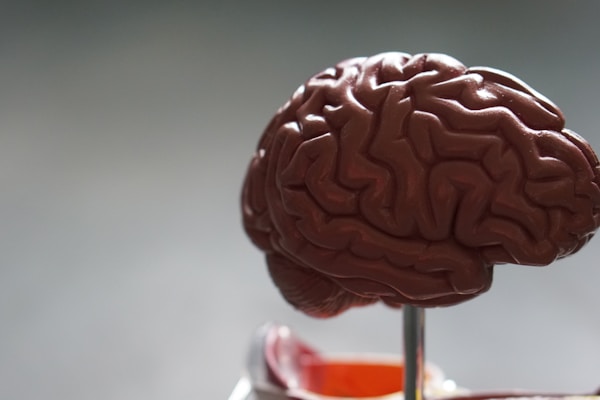
Why do diagrams help you understand complex concepts? Why do you remember pictures better than words? The answer lies in dual coding theory—one of the most powerful principles in cognitive science.
What Is Dual Coding Theory?
Dual Coding Theory, developed by Allan Paivio in the 1970s, proposes that our brain processes verbal and visual information through separate channels. Research published in Educational Psychology Review shows that when you combine words with images, you create two memory traces instead of one—dramatically improving retention.
Think of it like this: if you only read about the water cycle, you're using one mental pathway. But if you read about it AND see a diagram, you're using two pathways. This redundancy makes the information easier to recall later.
The Science Behind Dual Coding
Studies from PNAS demonstrate that visual and verbal information are processed in different brain regions. The verbal system handles language-based information, while the visual system processes images and spatial relationships.
When both systems work together, they create associative connections. According to research from NIH, this dual encoding leads to:
- Better initial learning (up to 40% improvement)
- Stronger long-term retention
- Faster recall during tests
- Deeper conceptual understanding
Practical Applications for Students
1. Create Visual Notes
Don't just write text—add diagrams, sketches, and symbols. Research from Learning and Instruction shows that students who create visual notes score 20-30% higher on tests.
Socranotes automatically generates mind maps from your study materials, creating visual representations that complement your text-based flashcards. This dual-coded approach maximizes retention without extra effort.
2. Use the Multimedia Principle
Studies published in Applied Cognitive Psychology show that combining narration with relevant graphics produces better learning than words or images alone.
When studying:
- Watch educational videos with good visuals
- Create concept maps while reading
- Draw diagrams to represent processes
- Use color coding to categorize information
3. Leverage the Picture Superiority Effect
Research consistently shows that people remember pictures better than words. According to Nature Neuroscience, we remember about 10% of what we hear, 20% of what we read, but 80% of what we see and do.
Transform abstract concepts into concrete images. For example, when learning about cell division, don't just memorize the stages—draw them, label them, and visualize the process.
Dual Coding Across Different Subjects
STEM Subjects
STEM topics are perfect for dual coding. Mathematical formulas, chemical structures, and physics diagrams all benefit from visual representation. Research from Science shows that students who use visual problem-solving strategies outperform those who rely solely on algebraic manipulation.
Socranotes helps by automatically extracting diagrams and equations from your textbooks, pairing them with explanatory text in your flashcards.
History and Social Sciences
Create timelines, maps, and relationship diagrams. Studies from Memory & Cognition demonstrate that spatial organization of historical events improves chronological understanding.
Language Learning
Pair vocabulary words with images rather than translations. Research published in Bilingualism: Language and Cognition shows that image-based vocabulary learning produces stronger, more flexible word knowledge.
Common Dual Coding Mistakes
Mistake 1: Decorative Images
Not all images help learning. Research from Journal of Educational Psychology warns against "seductive details"—interesting but irrelevant images that actually impair learning.
Use images that directly relate to the content you're learning. Every visual should serve a purpose.
Mistake 2: Overloading with Visuals
Too many competing visuals can overwhelm your cognitive capacity. Studies show that simple, clear diagrams work better than complex, detailed illustrations for initial learning.
Mistake 3: Ignoring the Verbal Channel
Dual coding doesn't mean "only visuals." You need both channels working together. Always pair your images with explanatory text or narration.
Tools and Techniques
Mind Mapping
Mind maps are the ultimate dual coding tool. They combine words (concepts) with visual structure (spatial relationships). Research from Trends in Cognitive Sciences shows that mind mapping activates both hemispheres of the brain.
Socranotes generates AI-powered mind maps from any document, automatically organizing information visually while preserving key concepts and relationships.
Sketch-noting
Combine traditional note-taking with simple sketches, icons, and visual metaphors. You don't need artistic skill—stick figures and basic shapes work perfectly.
Color Coding
Use colors strategically to categorize information. Studies show that color coding can improve recall by up to 25% when used consistently.
Digital Tools for Dual Coding
Modern technology makes dual coding easier than ever. Socranotes exemplifies this by offering:
- Automatic mind map generation from text
- Visual flashcards with image support
- Diagram extraction from PDFs
- Color-coded organization systems
Research from Educational Technology Research confirms that well-designed digital tools can enhance dual coding effectiveness beyond traditional methods.
Measuring Dual Coding Effectiveness
How do you know if dual coding is working for you? Track these indicators:
- Faster comprehension of new material
- Easier recall during practice tests
- Better ability to explain concepts to others
- Stronger performance on visual questions
Conclusion
Dual coding isn't just a study technique—it's how your brain naturally works. By intentionally combining verbal and visual information, you're working with your cognitive architecture, not against it.
The research is clear: students who use dual coding strategies consistently outperform those who rely on text alone. Whether you're creating hand-drawn diagrams or using AI-powered tools like Socranotes, the principle remains the same: two codes are better than one.
Start small. Add one visual element to your next study session. Draw a simple diagram. Create a mind map. Use color coding. Your brain will thank you with better retention and deeper understanding.
Visualize Your Learning with Socranotes
Transform any document into dual-coded study materials. Get automatic mind maps, visual flashcards, and organized notes.
Start Learning Visually