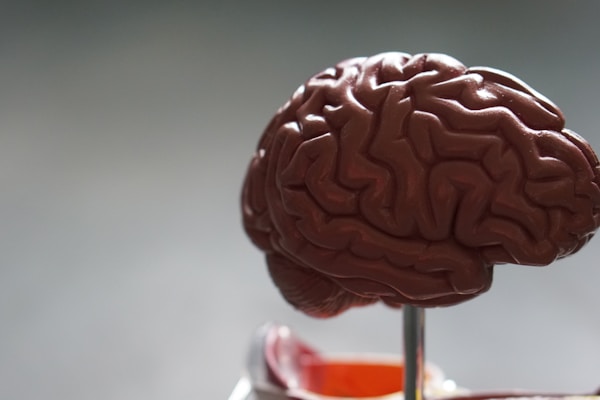
Passive learning—reading textbooks, watching lectures, highlighting notes—feels productive but often leads to minimal retention. Active learning flips this model, engaging your brain in ways that create lasting understanding and dramatically improve academic performance.
What is Active Learning?
Active learning is any instructional method that engages students in the learning process. Instead of passively receiving information, you actively participate in constructing knowledge through analysis, synthesis, and evaluation.
The difference is profound:
- Passive: Reading a chapter about photosynthesis
- Active: Drawing the photosynthesis process from memory and explaining each step
Research consistently shows active learning improves exam scores by 6-12% compared to passive methods.
Why Active Learning Works: The Science
The Learning Pyramid
Studies on retention rates reveal a clear hierarchy:
- Lecture (passive): 5% retention after 24 hours
- Reading (passive): 10% retention
- Audiovisual (passive): 20% retention
- Demonstration (semi-active): 30% retention
- Discussion (active): 50% retention
- Practice by doing (active): 75% retention
- Teaching others (active): 90% retention
Cognitive Load Theory
Active learning optimizes your working memory by forcing you to process information deeply rather than superficially. This creates stronger neural pathways and better long-term retention.
Core Active Learning Strategies
1. The Feynman Technique
Named after Nobel Prize-winning physicist Richard Feynman, this technique forces deep understanding:
- Choose a concept you want to learn
- Explain it in simple terms as if teaching a child
- Identify gaps in your explanation
- Review and simplify until you can explain it clearly
Why it works: You can't explain what you don't understand. This technique reveals knowledge gaps immediately.
2. Elaborative Interrogation
Transform every fact into a question:
- Fact: "The mitochondria is the powerhouse of the cell"
- Questions: Why does the cell need a powerhouse? How does it generate energy? What would happen without mitochondria?
This creates a web of understanding rather than isolated facts.
3. Self-Testing
The most powerful active learning tool. Testing yourself doesn't just measure learning—it creates learning.
Effective self-testing methods:
- Flashcards with spaced repetition
- Practice problems without looking at solutions
- Writing practice essays under time pressure
- Explaining concepts without notes
4. Concept Mapping
Create visual representations of how ideas connect:
- Start with a central concept
- Branch out to related ideas
- Draw connections between branches
- Use colors and symbols for categories
The act of deciding what connects to what forces deep processing.
5. The SQ3R Method
A structured approach to reading textbooks actively:
- Survey: Skim the chapter, read headings and summaries
- Question: Turn headings into questions
- Read: Read to answer your questions
- Recite: Answer questions without looking
- Review: Go back and check your answers
Advanced Active Learning Techniques
Think-Pair-Share
Even when studying alone, you can use this collaborative technique:
- Think: Spend 2 minutes considering a question
- Pair: Explain your thinking out loud (to yourself or a study partner)
- Share: Write down your explanation or discuss with others
Case-Based Learning
Apply concepts to real-world scenarios:
- For biology: How would this disease affect the body?
- For history: What would you have done in this situation?
- For math: Where would you use this formula in real life?
Problem-Based Learning
Start with a problem, then learn what you need to solve it:
- Identify what you need to know
- Research and learn those concepts
- Apply knowledge to solve the problem
- Reflect on what you learned
Making Lectures Active
You can't always control the teaching method, but you can control how you engage:
During Lectures:
- Predict: Before the professor explains, try to predict the answer
- Question: Constantly ask yourself "why?" and "how?"
- Connect: Link new information to what you already know
- Summarize: After each section, summarize in your own words
Cornell Note-Taking Method:
Divide your page into three sections:
- Notes column (right): Take notes during lecture
- Cue column (left): Write questions and keywords after class
- Summary (bottom): Summarize the page in 2-3 sentences
This forces active processing both during and after the lecture.
Active Reading Strategies
Annotation Techniques
Don't just highlight—engage:
- Question marks: For confusing sections
- Exclamation points: For important insights
- Arrows: To connect related ideas
- Margin notes: Summarize paragraphs in your own words
- Symbols: Create your own system (★ for key concepts, etc.)
The 3-2-1 Strategy
After reading a section, write:
- 3 things you learned
- 2 things you found interesting
- 1 question you still have
Group Study: Maximizing Active Learning
Effective Group Strategies:
- Jigsaw method: Each person becomes an expert on one topic and teaches others
- Debate format: Argue different perspectives on a concept
- Quiz each other: Take turns creating and answering questions
- Teach-back: Rotate who explains each concept
Ground Rules for Productive Group Study:
- Everyone must prepare individually first
- Set specific goals for each session
- Limit sessions to 90 minutes
- No phones or distractions
- Focus on understanding, not just completing work
Technology for Active Learning
Digital Tools That Promote Active Learning:
- Flashcard apps: Spaced repetition tools like Anki, Quizlet, or Socranotes
- Mind mapping: MindMeister, Coggle, or Socranotes' AI-generated mind maps
- Note-taking: Notion, Obsidian, or Socranotes for AI-powered organization
- Practice problems: Khan Academy, Brilliant
- AI tutors: Tools like Socranotes that ask questions and provide feedback
Using AI for Active Learning:
AI tools like Socranotes can enhance active learning when used correctly:
- Generate practice questions from your notes automatically
- Create flashcards with spaced repetition scheduling
- Provide instant feedback through Socratic dialogue
- Suggest connections between concepts via mind maps
- Quiz you with adaptive difficulty based on performance
Creating an Active Learning Study Routine
Sample 2-Hour Study Session:
- 0-5 min: Review previous session (active recall)
- 5-30 min: Read new material with SQ3R method
- 30-35 min: Break
- 35-60 min: Create concept map or teach-back
- 60-65 min: Break
- 65-90 min: Self-testing with practice problems
- 90-95 min: Break
- 95-120 min: Review and identify gaps
Overcoming Resistance to Active Learning
"Active learning feels harder"
It is harder—that's the point. The difficulty is what creates learning. Passive methods feel easier because they don't challenge your brain.
"I don't have time for all this"
Active learning saves time. You'll spend less total time studying because you'll retain more from each session.
"I've always studied passively and done fine"
Fine isn't optimal. Active learning can take you from B's to A's, or from A's to true mastery.
Measuring Your Active Learning
Self-Assessment Questions:
- Can I explain this concept without looking at notes?
- Can I apply this to a new situation?
- Can I teach this to someone else?
- Can I connect this to other concepts?
- Can I critique or evaluate this information?
If you answer "no" to any of these, you need more active engagement with the material.
Subject-Specific Active Learning
For STEM Subjects:
- Work problems without looking at solutions
- Explain your problem-solving process out loud
- Create your own practice problems
- Teach concepts using real-world examples
For Humanities:
- Write practice essays under timed conditions
- Debate different interpretations
- Create timelines and concept maps
- Connect historical events to current issues
For Languages:
- Speak and write from day one
- Have conversations (even with yourself)
- Translate without looking at dictionaries first
- Teach grammar rules to others
The 30-Day Active Learning Challenge
Week 1: Replace all highlighting with
self-testing
Week 2: Add the Feynman Technique to one topic
daily
Week 3: Create concept maps for all new material
Week 4: Teach what you've learned to someone else
Track your grades and retention. You'll see measurable improvement.
Conclusion: From Passive Consumer to Active Creator
Active learning transforms you from a passive consumer of information into an active creator of knowledge. It's more challenging, but the rewards—better grades, deeper understanding, and skills that last a lifetime—are worth the effort.
Start with one technique today. Your brain will thank you.
Activate Your Learning with Socranotes
Socranotes makes active learning effortless with automatic flashcards, self-testing features, and AI-powered practice questions. Learn how to use all features.
Start Learning Actively